Step 1 of 4
AI Profit Ready Assessment
01 / Free
The distance between what you spend on AI and the commercial return it produces.
Your team uses AI every day, and the P&L looks the same as last year. The return shows up when the change reaches the people doing the work.
We help your people do more with AI than the obvious, so the money you've already spent starts to pay.
The AI Profitability Gap™ closes when people change how they work with AI, and that change is our work. We start with the C-suite and their senior reports and carry it through to the teams using AI every day.
Adoption already happened. The tools are in your team's hands every day. For most companies, the profit hasn't followed. You can see your team using AI. What you can't see yet is the payoff: more output, lower costs, or better margins from the money you've already spent. If that's where you are, you're not behind. Almost no one has cracked that part.
The difference now is who turns that use into profit.
74% of frontline employees are now regular AI users, up 23 points year over year.
Source: BCG, AI at Work, 2026
The rollout looks like a win: a strong deck and a demo of what AI could do. Then the experts leave, and nothing changes for the person doing the work. The tools sit half-used and the spend keeps running.
The value comes when each person learns to use the tool well in their own job. Most rollouts skip that step, and it is where we do our work.
Want the reasons first? Read why your AI investment isn't paying off or how to build an AI ROI framework.
The AI Profit Bridge is how we close the AI Profitability Gap™. It starts with Purpose: what your AI investment is for, written as SMART goals in the numbers your business already reports, with at least one goal in money. Your people, process and platform then move toward those goals, each from Foundation through Optimization to Innovation. The gap is closed when the goals you set at the start have been met.
Everything we do is aimed at closing the AI Profitability Gap™. Start with the free assessment and go as far as the 90-day AI Profit Partnership. At each step up, we take on more of the work with you.
Step 1 of 4
01 / Free
Step 2 of 4
02 / $2,999
Credited in full against a Sprint started within six months.
Step 3 of 4
03 / $8,500
Step 4 of 4
04 / From $19,999
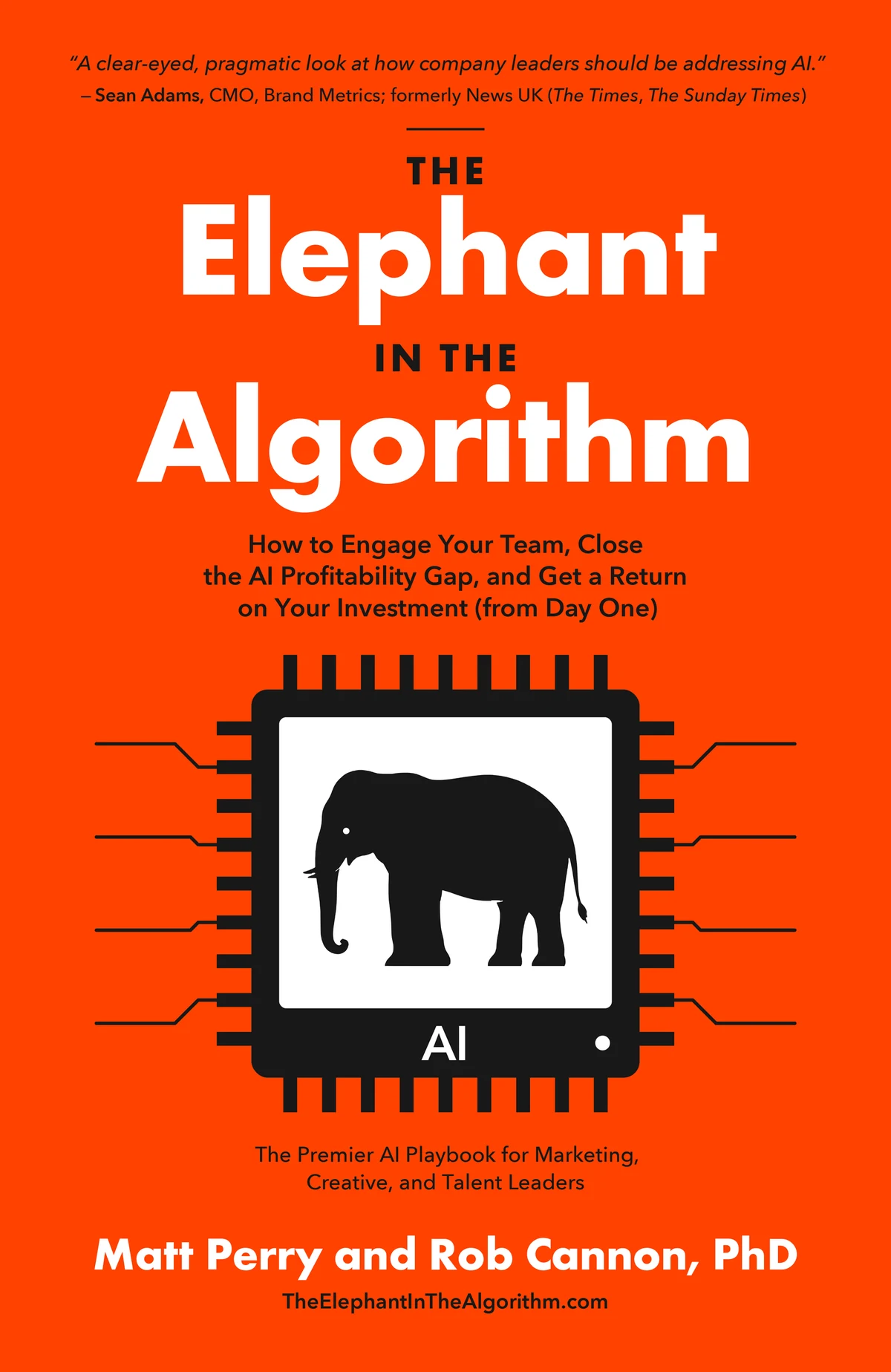
Out in early December
By Matt Perry and Rob Cannon, PhD. For leadership teams that have paid for AI and are still waiting for the return.
The AI Profitability Gap™ is a people problem, and helping people through change has been our whole career.

Co-founder & CEO
Matt has spent thirty years in marketing and creative, at M&C Saatchi, WPP, Omnicom, and Genero, where he launched and led the North American business. In those roles he worked on projects with companies including Google, Meta, Hilton, and PG&E. He studied AI for business application at Kellogg. He co-authored The Elephant in the Algorithm and hosts the podcast.
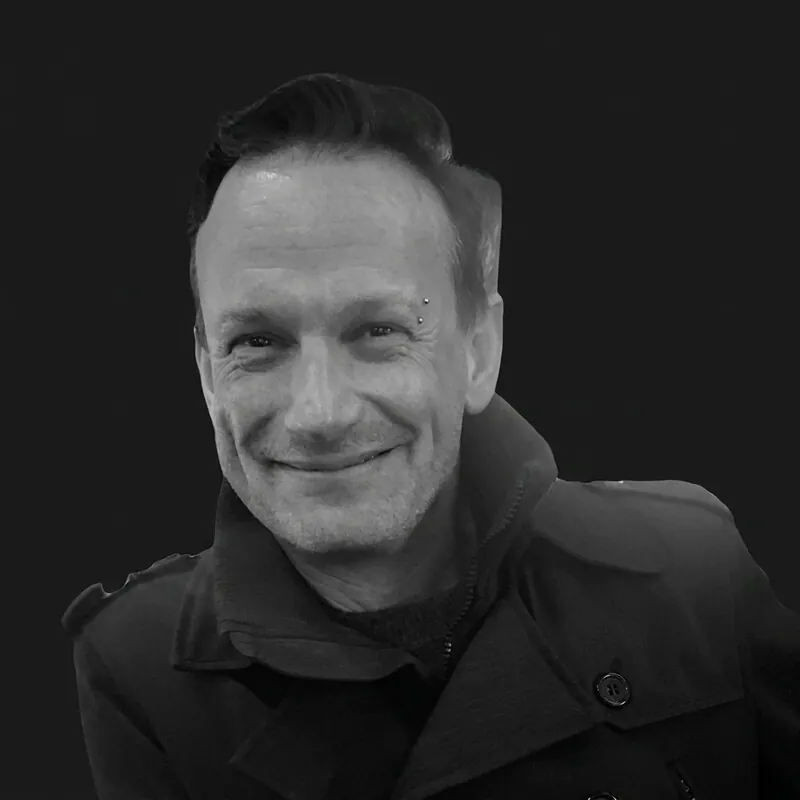
Co-founder & Chief Product Officer
Rob is an organizational psychologist who studied at Cambridge and earned his PhD at Sydney, with more than twenty years guiding people through change, including ten years at Sony. He co-authored The Elephant in the Algorithm and hosts the podcast.
Three ways to keep hearing from Matt and Rob, starting with the one that tells you where your team stands.
Eight questions, about two minutes, and a read on where the profit from your AI spend is leaking.
Take the free AI Profit Ready AssessmentThe Elephant in the Algorithm, by Matt Perry and Rob Cannon, PhD, is out in early December. Join the list and we'll email you the moment it's out.
Join the book listThe Elephant in the Algorithm podcast, on Spotify, Apple Podcasts and YouTube.
Our name comes from a simple idea: a person working with an average robot should get more done than they could on their own. That is when your AI starts to pay.